;)


5 common misconceptions about data destruction: what businesses get wrong
When an IT device reaches the end of its lifecycle, many organizations assume that the most difficult part is already over. The equipment is no longer in use, the data has supposedly been deleted, and the device can be recycled, resold, or disposed of.
But deleting data is not necessarily the same as destroying it securely. For businesses handling customer information, employee records, financial data, intellectual property, or other confidential information, secure data destruction should be treated as an integral part of IT asset lifecycle management – not as an afterthought.
Despite growing awareness of data security, several misconceptions continue to influence how organizations approach data destruction, hard drive destruction, IT asset disposal, and data erasure.
Let’s take a closer look at five of the most common ones.
1. We don’t need a data destruction procedure”
It is easy to assume that data destruction is a straightforward IT task. A device is no longer required, so someone deletes the files, resets the device, or sends it to recycling. The problem is that secure data destruction involves much more than deciding that a device is no longer needed.
A robust process should answer questions such as:
- When should a device be removed from service?
- Who is authorized to release it for destruction?
- Which devices contain data?
- Which data destruction method should be used?
- How should devices be identified and tracked?
- Who is responsible for verifying the process?
- What documentation should be generated?
Without a clearly defined procedure, different departments or employees may handle retired equipment differently. One employee may erase a laptop and consider the job finished. Another may send a hard drive for physical destruction. Someone else may simply put an old device into an IT recycling container. The result is an inconsistent process with potentially significant gaps.
A data destruction policy creates consistency.
Its purpose is to establish a repeatable process covering the entire lifecycle of a device:
identification → collection → secure handling → data destruction → verification → documentation.
2. “One data destruction method works for every type of media”
Another common misconception is that there is one universal way to destroy data. There isn’t.
Modern organizations use a wide range of storage technologies, including:
- HDDs
- SSDs
- USB flash drives
- memory cards
- magnetic tapes
- smartphones and tablets
- servers and other embedded storage devices.
These technologies do not all store information in the same way. Therefore, the appropriate data destruction method depends on the type and architecture of the storage media.
This is why the first question should not be: “Which destruction method do we normally use?” It should be: “What type of storage media are we dealing with?”
From there, the organization can determine the appropriate method based on the technology, data sensitivity, security requirements, and applicable procedures.
3. “Physical destruction is the safest option”
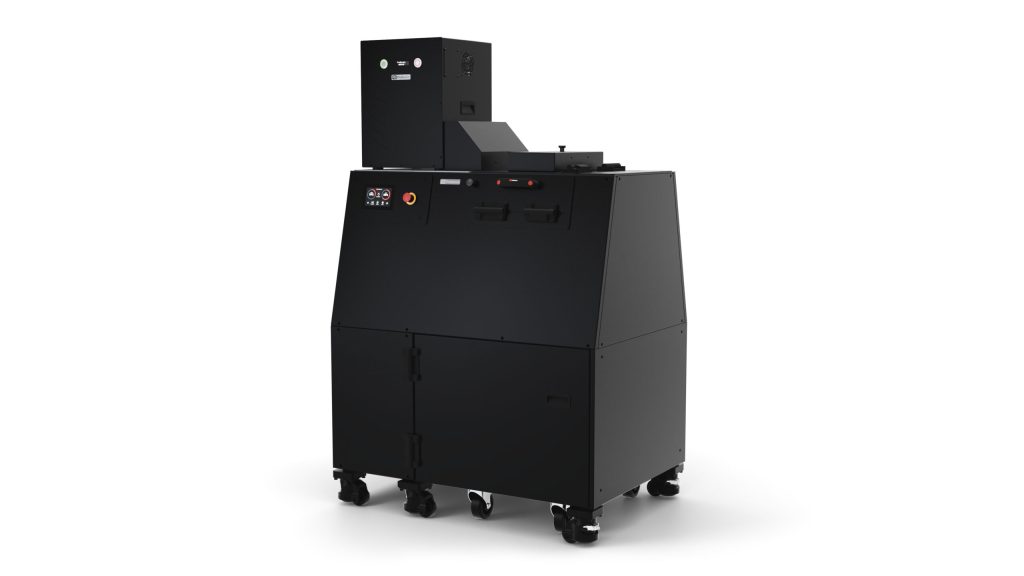
A hard drive is crushed, shredded, or otherwise physically damaged. It may therefore seem obvious that the data is gone.
However, physical damage and data destruction are not necessarily synonymous. The ability to recover information from a damaged device depends on multiple factors, including the type of storage media, the extent of the damage, and the recovery techniques available.
Specialized data recovery and digital forensics laboratories can work with damaged storage media.
4. “We don’t need documentation proving that the data was destroyed”
Imagine that a company sends 500 hard drives to an external data destruction provider. The provider confirms that the drives have been destroyed. Six months later, an auditor asks: “Can you show us which drives were destroyed and when?”
Suddenly, the importance of documentation becomes clear. A verbal confirmation is very different from a documented, traceable process.
Depending on the service and process, documentation can record information such as:
- the devices or storage media processed,
- unique device identifiers,
- the date of destruction,
- the destruction method,
- the quantity of devices,
- and confirmation that the process was completed.
A certificate of destruction or equivalent documentation can provide an important audit trail. It can help an organization demonstrate that retired assets were not simply removed from its premises but were processed according to an established data destruction procedure.
5. “The cheapest data destruction service is the best option”
“The cheapest data destruction service is the best option”
Price is an important consideration when selecting any service provider. But when sensitive data is involved, comparing providers solely on price can overlook important parts of the service. For example, two providers may offer apparently similar prices while delivering very different processes.
When evaluating a data destruction service, organizations should consider:
- how devices are collected,
- how they are transported,
- how assets are identified,
- how the chain of custody is managed,
- which destruction methods are used,
- whether devices are individually traceable,
- what documentation is provided,
- and how the final destruction can be verified.
The price of destroying one hard drive is only one part of the overall service. A secure process may involve collection, transportation, asset identification, secure storage, destruction, reporting, and documentation.

